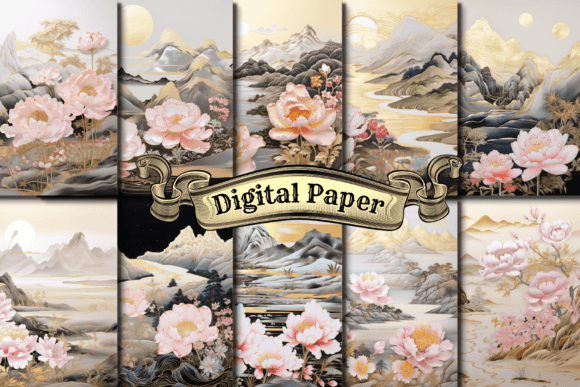
Antique Chinese Papers: A Practical Guide to Using Vintage Digital Patterns for Modern Design Projects
If you have ever browsed digital pattern sets and wondered whether antique Chinese papers belong in your design toolkit, you are not alone. These intricate, historically inspired textures carry a depth that modern flat graphics rarely achieve. But using them well requires more than downloading a file and pressing print. Many creators, from small business owners to seasoned graphic designers, discover this the hard way. They end up with muddy prints, awkward compositions, or products that feel more costume than crafted. This guide walks through the most common missteps and shows you how to get real value from antique Chinese paper patterns without wasting time, money, or creative energy.
Antique Chinese papers draw from centuries of decorative tradition. Think delicate floral motifs, calligraphic flourishes, geometric border patterns, and textured backgrounds that mimic aged silk or handmade rice paper. The digital version—typically a set of high-resolution JPG and PNG files, each around 4000 x 4000 pixels—gives you a versatile resource for print-on-demand (POD), wall art, stationery, branding, and even Cricut or Silhouette projects. The appeal is understandable. These designs carry a sense of history and elegance that minimalist trends cannot replicate. However, that same richness trips up many users who treat them like ordinary digital scrapbook paper.
Mistake One: Ignoring Resolution and Scale for POD Products
The most frequent error I see involves scale. Beginners assume that because an antique Chinese paper pattern measures 4000 x 4000 pixels, it will automatically look crisp on any product. That is true for many applications, but not all. A pattern that looks beautiful as a 12 x 12 inch square may turn into a chaotic mess when stretched across a full-coverage t-shirt or a fabric panel. The problem is not the file quality. It is forgetting to consider how the pattern repeats and at what physical size it will be printed.
For example, imagine you design a phone case using an antique Chinese paper with dense floral details. Printed at fit size, the flowers may become tiny specks. Printed too large, you lose the elegant repeat and end up with half a blossom awkwardly cropped at the edge. The solution is straightforward. Always preview your pattern at the intended print size before committing to production. Open the file in your design software, create a mockup at actual dimensions, and zoom to 100 percent view. If the pattern feels too busy or too sparse, adjust the scale or consider a different variation from the set.
Another overlooked detail is whether your POD platform expects a seamless tile or a single placement. Many antique Chinese paper sets include both full-page designs and repeatable patterns. Check the product description. If you plan to use the pattern across a large surface like a duvet cover or a dress, you benefit from a seamless file. If the pattern is meant for a single placement, like a framed print or a notebook cover, a standalone design works fine. Knowing which you have prevents frustration at the upload stage.
Mistake Two: Overlooking the Difference Between JPG and PNG for Specific Uses
This set includes both JPG and PNG files at 4000 x 4000 pixels. That is generous and flexible. Yet many users grab the JPG out of habit and never consider what the PNG offers. The difference matters for practical reasons. JPG files are great for backgrounds, wall art, and any design where you want a solid rectangular image with no transparency. But if you are working on a layered project a wedding invitation where the pattern should appear behind text without a white box, or a Cricut design where you want the pattern inside a cut shape, the PNG version saves you cleanup time.
I once watched a small business owner spend two hours manually removing a white background from a JPG pattern using masking tools. The entire time, the PNG sat unused in the same download folder. That is a preventable loss of efficiency. If you work with print-on-demand, particularly for apparel, sublimation, or any layered graphic, default to the PNG unless you specifically need a solid background. You preserve transparency and avoid edge artifacts that can ruin a professional look.
Mistake Three: Choosing Patterns That Clash with Your Product or Audience
Antique Chinese papers vary widely in mood. Some are ornate and richly colored, with deep reds, golds, and black ink. Others are subtle, with faded washes, soft earth tones, and delicate line work. Neither is inherently better. But using the wrong one for your audience or product creates a disconnect that customers notice, even if they cannot name why.
A common misstep happens with home decor. A blogger designing rustic farmhouse printables may select a heavily decorative antique Chinese paper with gold embossed details. The result clashes with their minimalist aesthetic. The pattern itself is beautiful, but it feels out of place. A better choice would be a pattern with softer ink washes or a simpler repeat that complements the existing color palette. Similarly, a creator selling phone cases to a younger audience may choose patterns that feel too formal. The patterns end up looking like museum reproductions rather than wearable art.
The fix is to match the pattern intention to your product's context. Before downloading, ask: Does this pattern support the story I am telling with my brand? Would my customer see this as elegant or as outdated? You can always adjust color tones in your editing software, but starting with a pattern that naturally aligns with your niche saves enormous rework.
Mistake Four: Assuming Antique Chinese Papers Work for Every Project Without Testing
One of the most common misunderstandings is that digital papers are universal. They are not. While the set is labeled as perfect for wall art, POD products, graphic design, social media, and stationery, each use case introduces specific requirements. A pattern that prints beautifully on a matte fine-art paper may appear washed out on a glossy phone case. A pattern that looks crisp on a computer screen may lose detail when sublimated onto polyester.
Test your file on the actual medium before production. This does not mean ordering a full batch. Run a single sample. Use a home printer to see how the colors render on paper. Upload a test file to a POD platform and check the preview at multiple zoom levels. If you use the pattern for a digital background, such as a Zoom virtual background or a social media banner, verify that text placed over the pattern remains readable. Antique Chinese papers often contain intricate details and dark areas that make white text disappear.
Another testing point is the pattern's orientation. Some designs have a clear top and bottom. If you use them for fabric or wrapping paper, the direction matters. A pattern with calligraphic characters or directional floral vines will look wrong if printed upside down or rotated randomly. Always check alignment before approving the final file.
Mistake Five: Neglecting the Legal and Licensing Side of Digital Patterns
This is the detail that trips up even experienced entrepreneurs. Digital pattern sets, including antique Chinese papers, come with specific usage rights. Some allow unlimited commercial use. Others restrict you to a certain number of products or require attribution. Still others forbid using the pattern as a standalone resale item, meaning you cannot just resell the digital files themselves.
I have seen sellers build entire shops around a set of digital papers, only to receive a takedown notice because they violated the license. The result is lost revenue, damaged reputation, and wasted design hours. Before you use antique Chinese papers for any commercial purpose, read the license agreement provided with your download. If the listing on Gumroad or Etsy or Creative Market does not specify commercial terms, contact the seller. Clarify whether you can use the patterns for POD, how many products you can create, and whether you need to credit the designer. This takes five minutes and saves months of potential trouble.
If you create digital products like planners or printable wall art, check whether you are allowed to include the pattern as part of a bundled file. Some licenses prohibit distribution of the pattern in editable format. You may need to flatten the design into a single PDF or image to comply.
What to Check Before You Buy or Download Antique Chinese Papers
When you evaluate a digital paper set, look beyond the preview images. Confirm that the file dimensions and resolution meet your requirements. 4000 x 4000 pixels at 300 DPI gives you a print area of roughly 13.3 x 13.3 inches, which is generous for most POD products. If you need larger coverage for fabric or wallpaper, check whether the pattern tiles seamlessly.
Examine the file format. JPG and PNG together offer the best flexibility. Ensure the PNG files include transparency where applicable. Look at the variety of patterns in the set. Ten to twelve distinct designs gives you enough range to mix and match without being overwhelming. Avoid sets where every pattern looks nearly identical. You want variety in color, density, and motif to cover different project types.
Read reviews if available. Other creators often mention how the patterns perform on specific products. They may flag issues with color accuracy, repeatability, or file quality. That feedback is gold. Also consider the seller's reputation. Designers who specialize in historical or cultural patterns usually provide better accuracy and more thoughtful curation than those who compile generic vintage collections.
Practical Steps to Get the Most from Antique Chinese Papers
Start with one pattern and one product. Test it fully before scaling up. Use the PNG version for layered projects and the JPG for full-background prints. Adjust scale in your design software rather than resizing the original file. Keep a master folder with all your patterns organized by color theme and style. This lets you quickly find the right design for a new project without scrolling through dozens of thumbnails.
Consider mixing antique Chinese papers with modern typography or minimal graphics. The contrast between ornate backgrounds and clean, contemporary elements often produces the most appealing results. Avoid pairing them with equally busy fonts or competing patterns. Let the paper be the star or the subtle foundation, but not both at once.
If you are new to digital papers, start with non-perishable items like wall art or notebook covers. These products are forgiving and do not require precise scaling or fabric orientation. Once you feel comfortable with how the patterns render in print, move into apparel or home decor. Each product type will teach you something about resolution, color, and layout that carries over to the next project.
Making Better Choices with Antique Chinese Papers
The difference between a forgettable product and one that draws attention often comes down to small decisions. Choosing the right file format. Testing at actual size. Matching the pattern to your audience. Understanding your license. These details do not sound glamorous, but they separate a usable design from a costly mistake.
Antique Chinese papers offer a rich design resource that fits easily into wall art, POD, stationery, branding, and craft projects. When you treat them with the same care you would give any creative asset, they reward you with depth, authenticity, and a visual quality that generic patterns cannot match. Take the time to understand your set, test it thoroughly, and apply it with intention. Your customers will notice the difference, and your workflow will stay smooth. That is the point where good tools become great ones.