The Versatile Appeal of Watercolour Flowers in Modern Design
Digital design has opened up countless possibilities for creators, but few resources offer the same balance of artistry and flexibility as high-quality watercolour flower assets. Whether you are designing wedding stationery, crafting personalised gifts, or building a brand identity, the distinctive charm of watercolour flowers can elevate your work. This article explores what makes watercolour flowers a compelling choice, how they compare with other design approaches, and when they might—or might not—be the right fit for your project.
Understanding Watercolour Flowers as a Design Resource
Watercolour flowers are digital or scanned reproductions of floral paintings created using watercolour techniques. Unlike vector illustrations or photographic flower images, watercolour flowers capture the soft, fluid transitions of pigment on paper. The result is a look that feels organic, gentle, and slightly unpredictable—qualities that many designers and hobbyists find refreshing in an era of hyper-polished digital imagery.
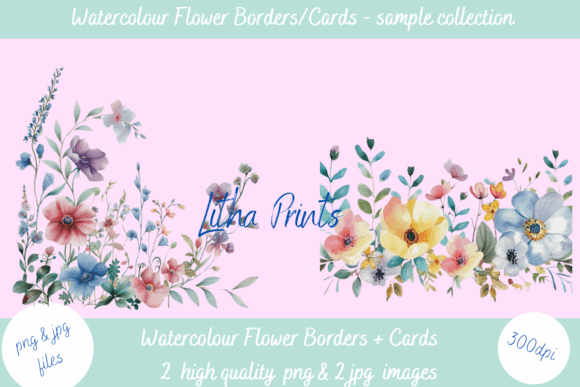
The product described here includes two watercolour flower images in transparent PNG format, each measuring 3000 x 3000 pixels at 300 dpi, plus two ready-made cards in JPG format at 6 x 6 inches. The transparent background is a significant advantage, as it allows you to layer the flowers over different backgrounds without any awkward white edges. This format sits at the intersection of art and utility, offering a hand-painted aesthetic in a ready-to-use digital package.
How Watercolour Flowers Compare with Other Floral Image Styles
To understand where watercolour flowers fit, it helps to consider the broader landscape of floral design resources. Below are several common alternatives, along with their typical strengths and limitations.
Photographic Flower Images
Photographs offer realism and detail that few other formats can match. A high-resolution photo of a rose or peony can be stunning for large-scale prints or backgrounds. However, photographs come with fixed lighting, colour casts, and often complex backgrounds that require careful masking. They also tend to look best in realistic or editorial contexts. Watercolour flowers, by contrast, offer a softer, more interpretive look that can feel more intimate and adaptable for stationery, journalling, or home decor projects where a painterly touch is desired.
Vector Floral Illustrations
Vector graphics are infinitely scalable and typically have clean, crisp lines. They are excellent for logos, icons, and screen printing. But vectors can sometimes feel rigid or overly geometric, especially when you want to convey the gentle, organic feel of natural blooms. Watercolour flowers introduce texture, subtle colour variation, and a sense of imperfection that vectors often lack. If your project calls for warmth and a handcrafted feel, watercolour flowers are generally the stronger option.
Clip Art and Flat Digital Florals
Many budget-friendly clip art sets offer stylised flower shapes in flat colours. These can work well for quick projects or children’s materials, but they rarely carry the same visual depth or emotional resonance as watercolour images. Watercolour flowers, especially those with high resolution and transparent backgrounds, provide a more premium appearance without requiring the same skill level as creating a watercolour painting from scratch.
Hand-Painted Watercolour Originals
If you are a skilled painter, creating your own watercolour flowers gives you total creative control. You can choose your palette, brush techniques, and paper texture. However, this approach is time-consuming, requires materials and space, and still needs to be digitised for most modern applications. A digital product like the one described offers a practical middle ground: you get the authentic watercolour look without the weeks of practice and equipment investment.
Key Strengths of Ready-Made Watercolour Flower Assets
Beyond the aesthetic appeal, there are several practical advantages to using watercolour flowers in digital format.
- Instant usability. The transparent PNG format means you can drop the flowers into your design software and start composing immediately. No masking, no background removal, no colour correction needed.
- High resolution. At 3000 x 3000 pixels and 300 dpi, these images are suitable for both digital use and high-quality print. You can use them on wedding invitations, thank-you cards, or even fabric items like cushions and tote bags without worrying about pixelation.
- Versatile colour palette. Pastel tones are especially forgiving and pair well with a wide range of design styles, from minimalist and modern to romantic and vintage. Pastels tend to complement rather than overwhelm other design elements.
- Dual format bonus. The inclusion of both PNG files for custom design work and ready-made JPG cards gives you a head start. If you need something quickly, the cards are already formatted; if you want to create something unique, the transparent PNGs give you that freedom.
Practical Tradeoffs and Limitations to Consider
No single resource fits every scenario. Watercolour flowers have some limitations that are worth weighing against your specific needs.
Limited Customisation of the Art Itself
Because these are pre-painted images, you cannot change the colour of a petal or the angle of a stem after the fact. If your project requires a very specific colour scheme or a particular flower variety not included in the set, you may need to supplement with additional assets or consider a different approach. That said, the transparency of the PNGs allows you to tint or recolour the images to some extent using software like Photoshop or Affinity, especially if you use blending modes or layer adjustments.
Resolution and File Size Management
While 3000 x 3000 pixels offers excellent quality, it also produces relatively large files. For web use or email attachments, you may need to resize the images to keep loading times reasonable. This is a minor consideration but worth noting if you plan to use the flowers extensively online.
Style Specificity
Watercolour flowers have a distinct look that works beautifully in many contexts, but may feel out of place in ultra-modern, corporate, or highly technical designs. If your brand or project leans toward sharp geometry, neon colours, or photorealism, these assets may not align well. In such cases, vector florals or abstract flower graphics might serve you better.
When Watercolour Flowers Are the Right Choice
Based on the strengths and tradeoffs described, here are the situations where watercolour flowers tend to excel.
- Wedding and event stationery. The romantic, soft quality of watercolour flowers suits save-the-dates, invitations, place cards, and thank-you notes beautifully. Pastel tones are especially popular for spring and summer weddings.
- Personalised gifts and home decor. Mugs, cushions, and prints featuring watercolour florals have a handmade feel that many people find more heartfelt than mass-produced designs.
- Scrapbooking and journalling. The transparent PNG format allows you to layer flowers behind text, photos, or other embellishments, creating depth without overwhelming the page.
- Small business branding. For florists, bakeries, salons, or boutique shops, watercolour flowers can lend a soft, approachable identity that stands out from corporate-looking competitors.
- Card making in bulk. The ready-made JPG cards give you a quick solution when you need multiple identical cards, while the PNGs let you create variations for a more custom feel.
When You Might Need a Different Option
Conversely, there are scenarios where other resources may be more appropriate. If you are designing for a tech startup, a fitness brand, or any project requiring a minimalist, monochrome, or highly structured look, watercolour flowers may feel too decorative. Similarly, if your project demands exact botanical accuracy—for example, a scientific publication or a detailed botanical print—photographs or professionally rendered vector diagrams would be more reliable.
If you need a very large set of flower varieties or multiple colourways, a single two-image product may feel limiting. In that case, you might consider a larger watercolour flower bundle or a subscription to a stock image library. The key is to match the scale and tone of your resource to the scope and style of your project.
Factors That Influence Your Decision
When evaluating whether watercolour flowers are the right choice for your work, consider the following decision factors.
- Your skill level with design software. Transparent PNGs are user-friendly, but you still need basic familiarity with layers, resizing, and positioning. If you are new to design, the ready-made cards provide a no-fuss starting point.
- The intended medium. Print, digital, and merchandise each have different resolution and file format requirements. At 300 dpi, these images are print-ready for most home and small-scale commercial printing.
- The emotional tone you want to convey. Watercolour flowers naturally evoke softness, nostalgia, and natural beauty. If that aligns with your message, they are a strong choice.
- Your timeline. Instant download and pre-formatted cards mean you can go from purchase to production quickly. This is helpful for last-minute projects or small batches.
- Budget. A focused set of two high-quality images is typically more affordable than larger bundles or custom commissions. For one-off or small-scale projects, this approach offers good value without overpaying for assets you will not use.
Making the Most of Watercolour Flowers in Real Projects
To illustrate how these assets might be applied, consider a few realistic scenarios.
Scenario one: A freelance designer is creating a set of thank-you cards for a local florist. Using the transparent PNGs, she layers the watercolour flowers over a soft cream background, adds the florist’s logo, and prints a small batch. The watercolour style complements the florist’s natural brand, and the pastel tones keep the cards elegant without competing with the florist’s own arrangements.
Scenario two: A hobbyist scrapbooker wants to document a summer garden visit. She prints the ready-made cards at 6 x 6 inches and uses them as background pages, adding photos and journal entries on top. The watercolour flowers give the spread a cohesive, artistic feel without requiring her to paint or draw anything herself.
Scenario three: A bride-to-be is designing her own wedding invitations. She uses the transparent PNGs to position a watercolour bloom at the top of each invitation, pairing it with a clean serif font. The soft pastel pink of the flowers ties in with her overall colour palette, and the high resolution ensures the invitations print clearly at home.
Final Thoughts on Choosing Watercolour Flowers
Watercolour flowers occupy a unique space in the design world. They offer the authenticity of hand-painted art combined with the convenience of digital assets. Their strengths lie in warmth, versatility, and a distinctly human quality that polished vector graphics or raw photographs do not always capture. At the same time, they are not a one-size-fits-all solution. The best choice depends on your project’s tone, technical requirements, and your own comfort with digital design tools.
For anyone working on stationery, personalised gifts, home decor, or creative journalling, watercolour flowers in a high-resolution transparent format provide a practical and beautiful resource. By understanding both what they offer and where they may fall short, you can make an informed decision that serves your creative goals.