Chasing the Sun SVG: A Retro Design for Versatile Apparel and Product Printing
When you are exploring design assets for custom merchandise, the combination of aesthetic appeal and file format flexibility often determines whether a project moves forward smoothly or hits frustrating roadblocks. The Chasing the Sun SVG design sits at an interesting intersection — it offers a retro t-shirt style that carries a distinct visual statement, while its multi-format package gives you options that many single-file designs simply cannot match. Understanding what makes this design distinct, how it compares with alternative approaches, and where it fits best can help you decide whether it aligns with your specific project needs.
What Chasing the Sun SVG Offers Beyond the Visual
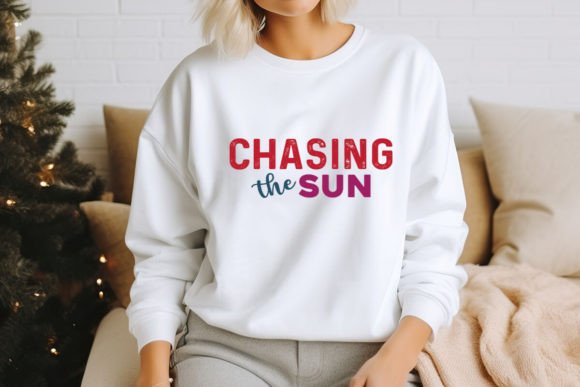
The design itself draws on a retro aesthetic — think bold lines, sun motifs, and a nostalgic feel that resonates with those who appreciate vintage-inspired apparel. But what sets this offering apart is not just the artwork. The package includes the design in several formats: a PNG file that is print-ready at 1080×1080 pixels with 300 dpi resolution, plus EPS, DXF, and SVG vector files. This combination means you are not locked into one workflow or one type of product. You can take the PNG and print it directly onto t-shirts, sweaters, jumpers, mugs, stickers, pillows, hoodies, or any printable surface. Meanwhile, the vector formats give you the ability to modify colors, resize without losing quality, and integrate the design into more complex layouts.
For someone who runs a small print-on-demand shop, experiments with multiple product lines, or simply wants one design that can appear on a hoodie and a sticker with consistent quality, this kind of format flexibility reduces the need to re-purchase or re-create artwork for different mediums.
How Chasing the Sun SVG Compares with Single-Format Design Assets
Many design assets available online come in a single format — often just a PNG or just an SVG. A standalone PNG is perfectly adequate if your only goal is to print a design onto a t-shirt using a basic heat press or direct-to-garment printer. However, if you later decide you want to print that same design on a mug, you may find that the PNG resolution is not ideal for curved surfaces, or that the background needs to be removed or recolored. Similarly, a standalone SVG file is great for scaling and editing, but not every printing service or DIY method handles SVG files directly — especially for something like a sticker or a pillow, where a high-resolution PNG is often the easier choice.
With Chasing the Sun SVG, you avoid that either-or limitation. The PNG file at 300 dpi and 1080×1080 pixels is already optimized for print-ready use. You do not need to open vector software or adjust resolution settings before printing on a standard t-shirt or hoodie. The EPS and DXF formats, meanwhile, are commonly used in professional cutting machines (like those from Cricut or Silhouette) and in design software such as Adobe Illustrator or CorelDRAW. If you work with a vinyl cutter for custom stickers or heat-transfer designs, the DXF file can be imported directly without conversion headaches.
The SVG format, being web-friendly and widely supported, also allows for easy color changes and scaling. This makes the design suitable for digital mockups, online store listings, or further creative manipulation.
Strengths of the Multi-Format Approach
One clear strength is the reduction of friction between your creative intention and the final product. Instead of sourcing one file for apparel and a different file for home goods, you have a single design that can move across product categories. This is particularly useful if you run a small brand and want a consistent visual identity across multiple items. The ability to modify colors within the vector files also means you can adapt the retro look for different seasons, color schemes, or customer preferences without starting from scratch.
Another strength is that the vector shapes are described as 100 percent vector-based, which means the design is mathematically defined rather than pixel-based. This ensures that whether you are printing a small sticker or a large hoodie, the edges remain sharp, and the details do not blur. The high quality at 300 dpi in the PNG format also gives you a reliable fallback if you need a raster file for a quick print job.
Tradeoffs and Limitations to Consider
No design package is perfect for every scenario, and Chasing the Sun SVG is no exception. If your primary need is a single, no-edits-required file for a one-off project, the multi-format package may feel like more than you need. You might pay a bit more for the bundled formats when a standalone PNG could have sufficed. Similarly, if you work exclusively in one ecosystem — for example, you only use a specific print-on-demand platform that accepts only PNG files — the EPS, DXF, and SVG files may sit unused.
Another consideration is that retro designs, while appealing to a certain audience, may not suit every brand or customer base. If your target market prefers minimalist, modern, or hyper-realistic styles, the bold retro statement of Chasing the Sun SVG might feel mismatched. It is important to evaluate whether the aesthetic aligns with your audience before committing to the design for a full product line.
Additionally, while the PNG file is print-ready at 1080×1080 pixels, that size is best suited for standard apparel prints. For very large formats — such as a full-back hoodie print or a large wall poster — you may need to scale the design up using the vector files. This is straightforward with the SVG or EPS files, but it does require access to vector editing software and at least basic familiarity with scaling techniques.
When Chasing the Sun SVG Is the Right Choice
This design and format combination works well for several specific scenarios. If you are launching a small apparel line with a retro theme and want to offer the same graphic on t-shirts, hoodies, and accessories like mugs or stickers, the multi-format package lets you produce all of those items without reworking the artwork. Similarly, if you operate a print shop that handles both direct-to-garment printing and vinyl cutting, having both raster and vector files streamlines your workflow.
For individuals or small business owners who are still experimenting with different printing methods, the bundled formats allow you to test which approach works best for your setup. You might print a few t-shirts using the PNG and a heat press, then cut a vinyl sticker using the DXF file, and later create a digital mockup with the SVG — all from the same design. This flexibility reduces the risk of investing in artwork that only works for one type of production.
Another good fit is for designers who like to customize and iterate. The vector files are described as easy to modify and change color, which means you can adapt the retro statement for different campaigns, holidays, or customer requests. If a buyer asks for the same design in a different color palette, you can adjust it quickly rather than starting a new artwork from scratch.
When Another Option May Serve You Better
If your project is extremely narrow — for example, you need a single design for a one-time event and you have no intention of printing on multiple products — a simple, lower-cost PNG file from a different source might be more economical. Similarly, if you require a design that is not retro in style and instead needs to fit a specific modern or corporate aesthetic, Chasing the Sun SVG may not be the right visual fit.
Another scenario to consider is if your printing workflow relies entirely on a specific platform that does not accept EPS or DXF files and you have no need for vector editing. In that case, the extra formats add no practical value. However, you still benefit from the high-resolution PNG, so it is not a complete mismatch — it is simply that you may not use the full package.
If your production involves large-scale commercial printing with extremely specific color matching or Pantone requirements, you may need a design originally created in a format that supports those workflows more directly. While the vector files can be adapted, you should confirm that the design will meet the technical specifications of your printer before committing.
Practical Comparison: One Design Across Multiple Products
Imagine you want to create a small product line for a pop-up shop or an online store. You plan to offer t-shirts, hoodies, tote bags, and mugs, all featuring the same retro sun graphic. With a single-format design, you might need to purchase separate files optimized for each product type, or spend time converting and resizing a single file, which can introduce quality issues. With Chasing the Sun SVG, you can print t-shirts and hoodies using the PNG file at 300 dpi, import the DXF into your cutting machine for vinyl stickers or heat-transfer designs on tote bags, and use the SVG to create a digital proof for your mug printing service. The design remains consistent across all products, and you avoid the per-product cost of buying additional artwork.
Now consider an alternative scenario: you are a graphic designer who wants to offer custom variations of the design to different clients. The vector formats allow you to open the file in Illustrator or similar software, change the color scheme to match each client's brand, and export a new PNG or SVG for their specific use. This is much faster than recreating a retro sun graphic from scratch each time.
Key Decision Factors When Evaluating Chasing the Sun SVG
When deciding whether this design and format package fits your needs, consider the following factors:
- Product range: How many different types of products do you plan to print? More variety increases the value of multi-format files.
- Technical comfort: Are you comfortable opening vector files in editing software? If so, the EPS, DXF, and SVG formats give you control over color and scaling. If not, the PNG file still works well for basic printing.
- Aesthetic fit: Does the retro t-shirt style match your brand or project identity? If your audience responds well to nostalgic, statement-driven designs, this is a strong candidate.
- Production volume: For small-batch or one-off projects, the bundled formats offer flexibility without requiring a large upfront investment in multiple design purchases. For very high-volume production, you may want to verify that the design meets your specific printer's requirements.
- Modification needs: If you plan to change colors, add text, or combine the design with other elements, the vector formats are essential. If you plan to use the design exactly as shown, the PNG file may be all you need.
Final Perspective on Chasing the Sun SVG
Chasing the Sun SVG sits in a useful middle ground. It does not promise to be the cheapest option, nor does it claim to suit every project. Instead, it offers a well-rounded package for those who value both aesthetic consistency and format flexibility. The retro design carries a clear statement, and the inclusion of PNG, EPS, DXF, and SVG files means you can take that statement across t-shirts, hoodies, mugs, stickers, pillows, and beyond without reworking the artwork at every step.
For the adult audience aged 20 to 50 who is comparing options and evaluating what works best for their printing projects, the key takeaway is this: if your workflow involves multiple product types, if you appreciate the ability to modify and adapt a design, and if the retro style resonates with your audience, then Chasing the Sun SVG is a practical and versatile choice that can save you time and reduce the friction between idea and finished product. If your needs are simpler or your style preferences lean elsewhere, other options may serve you better. The strength of this offering lies not in being everything to everyone, but in being thoughtfully prepared for the realities of multi-product printing and creative adaptation.