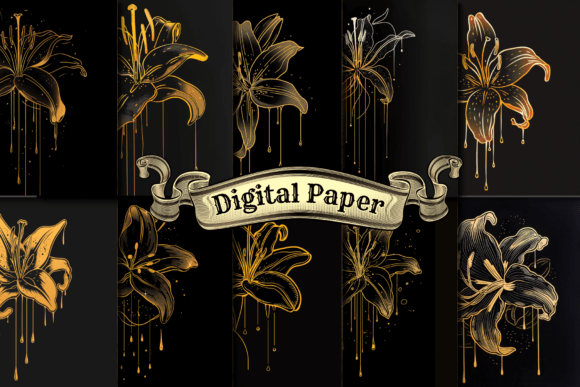
Lily Digital Paper as a Creative Catalyst for Modern Design and Print on Demand
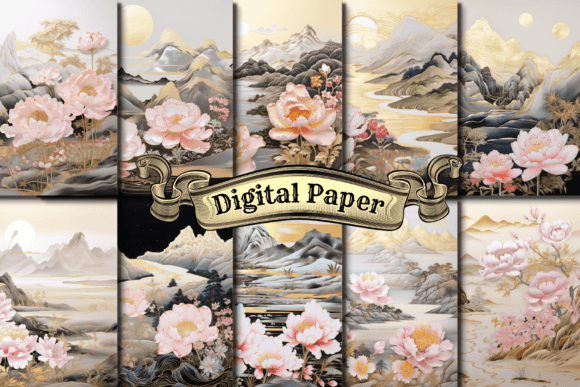
Digital patterning has quietly transformed the way creators, entrepreneurs, and hobbyists approach visual content. Where once a designer might spend hours scanning physical textures or licensing stock imagery, today a single set of high-resolution digital papers can unlock entire collections of cohesive work. The Lily Digital Paper collection, with its ten to twelve JPG and PNG files at 4000 x 4000 pixels each, represents a particularly versatile option for anyone working across print, web, or product design. Understanding what makes this format valuable, and how to apply it across different creative contexts, can help professionals and hobbyists alike make more informed choices about their digital assets.
Why Resolution Matters Beyond the Spec Sheet
The 4000 x 4000 pixel dimension is not merely a number. In practical terms, it means that each pattern can be printed at high quality up to roughly 13 inches by 13 inches at 300 DPI, and significantly larger if the intended output is a fabric, a poster viewed from a distance, or a digital background where absolute sharpness is less critical. For someone producing print on demand items such as phone cases, T-shirts, or homeware, this resolution eliminates the need to upscale or tile patterns in ways that degrade visual integrity. The file is ready to drop directly into a print template, whether that template is on Redbubble, Printful, or a local production workflow.
Moreover, the dual format offering of JPG and PNG adds flexibility. JPG files are ideal for web use, social media banners, and digital backgrounds where file size and loading speed matter. PNG files, by contrast, preserve transparency or allow for cleaner layering in software like Adobe Photoshop, Affinity Designer, or Procreate. Having both means a creator can move from concept to production without converting formats or losing quality. This is particularly relevant for someone designing brand assets or shop banners where crisp edges and consistent color are non-negotiable.
The Role of Pattern Sets in Print on Demand Workflows
Print on demand has grown from a side hustle into a serious business model, and digital paper is one of its quieter enablers. A single pattern set can generate dozens of product variations: a floral lily pattern appears on a notebook cover, a tote bag, a phone case, and a throw pillow, all with minimal additional design work. The Lily Digital Paper collection, with its ten to twelve distinct patterns, effectively gives a POD seller a mini collection right out of the gate. Instead of sourcing individual designs for each product, the creator can batch upload variations across multiple items, maintaining a coherent aesthetic throughout a shopfront.
For example, a seller launching a homeware line might use one pattern for a set of coasters, another for a tea towel, and a third for a cushion cover, all while keeping the overall visual language consistent. This coherence builds brand recognition, which is especially valuable for newer shops competing in crowded marketplaces. The high resolution also ensures that when a customer orders a duvet cover or a wall tapestry, the pattern will not appear pixelated or blurry at scale. That kind of reliability matters for both customer satisfaction and long-term seller reputation.
Graphic Design, Branding, and Digital Backgrounds
Beyond POD, digital paper has become a staple in graphic design workflows. Designers frequently need textured or patterned backgrounds for presentations, social media graphics, website headers, or email templates. The Lily Digital Paper set serves this need directly. Because each file is 4000 by 4000 pixels, it can be used as a full-screen background on most devices without stretching or repeating awkwardly. For branding projects, a pattern can become a subtle watermark, a texture behind typography, or a repeating element in a brand guidelines document.
Consider a small business owner who needs a cohesive look for their Instagram feed and Etsy shop. Instead of hiring a designer for multiple custom backgrounds, they can use different patterns from the same set across product photos, quote graphics, and banner images. The visual connection between these elements creates a professional, polished appearance without requiring advanced design skills. This is one of the hidden strengths of digital paper: it lowers the barrier to entry for non-designers who still want aesthetically consistent content.
For educators and researchers, digital paper can serve as a visual aid in presentations or educational materials. A patterned background can make a slide more engaging without distracting from the content, provided the pattern is subtle enough. The JPG format loads quickly in PowerPoint or Google Slides, and the 4000 pixel resolution ensures that even when projected on a large screen, the pattern remains sharp.
Stationery, Planners, and Notebook Projects
The stationery market, both digital and physical, has exploded in recent years. Bullet journal enthusiasts, planner designers, and printable sellers all rely on patterned backgrounds to create visually appealing layouts. A set like Lily Digital Paper can be used as the base for planner pages, habit trackers, weekly spreads, or decorative stickers. Because the files are PNG, they can be layered into templates with transparent elements, while the JPG versions work well for full-page backgrounds in printable PDFs.
Someone selling digital planners on Etsy, for instance, could use one pattern for the cover page, another for weekly spreads, and a third for the notes section. The consistency across the planner makes it feel like a premium product rather than a collection of mismatched elements. Similarly, a physical notebook creator using a print on demand service can upload patterns directly to the cover template, knowing that the resolution will hold up in production. The variety of ten to twelve patterns also allows for themed collections, such as a spring series or a floral bundle, which tend to sell well as sets.
Silhouette and Cricut Design Space Projects
Crafters who use cutting machines like Silhouette or Cricut are another key audience for digital paper. These machines rely on print-then-cut workflows, where a pattern is printed onto adhesive paper or fabric and then cut into shapes. The Lily Digital Paper set, with its 4000 pixel resolution, is particularly well suited for this process. When a pattern is printed at full size, the cutting machine can register the print marks and cut around shapes with precision. Low-resolution patterns often result in fuzzy edges or misaligned cuts, which is frustrating for anyone making stickers, labels, or iron-on transfers.
For example, a crafter creating custom stickers for a small business might use a lily pattern as a background, then cut multiple sticker shapes from a single printed sheet. The high resolution means that even small cut pieces retain the pattern detail. This is also useful for scrapbooking, card making, and other paper crafts where the pattern needs to look sharp at close range. The variety of patterns in the set gives the crafter multiple options without needing to buy separate collections for each project.
Wall Art and Printable Designs
Digital downloads have become a popular revenue stream for creators, and wall art is one of the most common categories. A patterned print can be sold as a standalone artwork or used as a background for typography posters. The Lily Digital Paper collection, at 4000 by 4000 pixels, is large enough to be printed as a 16x20 inch poster at 200 DPI, or as a 13x13 inch print at 300 DPI. For many buyers, this is the sweet spot for affordable wall art that looks professional when framed.
A creator might offer the same pattern in multiple sizes as a digital download, or use different patterns from the set to create a cohesive series. Because the patterns are already designed and rendered, the only work required is to decide on framing and sizing. This makes digital paper an efficient asset for anyone running a passive income shop. The buyer gets a high-quality file that they can print locally, and the seller does not have to manage inventory or shipping.
Technical Considerations for Long-Term Use
When using digital paper across multiple projects, a few technical points can make the difference between a smooth workflow and a frustrating one. File management matters. Naming conventions that include the pattern name, format, and resolution help avoid confusion, especially when working with ten to twelve variations. Backing up both the JPG and PNG versions ensures that you have flexibility later, even if you only need one format for a current project.
Color consistency is another consideration. Digital paper that looks vibrant on a monitor may print slightly differently depending on the printer and paper type. Ordering a test print before launching a product line is always wise. For Lily Digital Paper, the 4000 pixel resolution gives you headroom to adjust brightness, contrast, or saturation without losing detail. You can also soft-proof the files in design software to simulate how they will appear on matte versus glossy paper.
For POD sellers specifically, checking the file requirements of each platform is essential. Some platforms prefer JPG, others PNG, and some have maximum file size limits. Having both formats available from the outset saves time during upload. The 4000 pixel dimension also meets the upper end of most POD platform requirements, so you will rarely encounter a file that is too small or too large.
Who Benefits Most from This Kind of Asset
While digital paper is broadly useful, certain user types gain disproportionate value from a set like this. Small business owners who manage their own branding and product listings benefit because they can maintain visual consistency without hiring a designer. Hobbyists and crafters appreciate the ready-to-use nature of the files, especially when working with cutting machines or printable projects. Graphic designers use digital paper as a time-saving resource for client work, avoiding the need to create patterns from scratch for backgrounds or textures.
Educators and researchers may find digital paper useful for creating visually engaging handouts, slide decks, or classroom materials. The ability to use a subtle pattern behind text or data can make materials more memorable. Even professionals in unrelated fields, such as event planning or nonprofit communications, can use digital paper for flyers, invitations, or social media campaigns. The barrier to entry is low, and the output quality is high, which makes this format accessible across skill levels.
Print on demand entrepreneurs, in particular, will find that a single set of patterns can form the backbone of an entire product catalog. By rotating patterns across seasons or collections, they can keep their shop looking fresh without constantly sourcing new designs. The ten to twelve patterns in Lily Digital Paper provide enough variety for a small launch, and the resolution ensures that the products will meet customer expectations for print quality.
Pushing Creativity Beyond Obvious Use Cases
One of the less discussed advantages of digital paper is its role as a creative catalyst. Sometimes, working within the constraints of a pre-made pattern forces a designer to think differently about layout, color, and composition. A pattern that seems busy on its own might become elegant when used as a small accent on a notebook spine or a phone case edge. A pattern that reads as too subtle for wall art might be perfect as a fabric for a pillow cover where texture matters more than contrast.
Experimentation is part of the process. Layering two patterns from the same set, adjusting opacity, or combining them with solid color blocks can yield results that feel custom and original. The high resolution of each file means that these experiments do not degrade quality. You can crop, rotate, scale, and recolor with confidence, knowing that the underlying image will hold up. This flexibility is what makes digital paper more than a simple asset: it becomes a tool for exploration.
For anyone who sells creative products, the ability to iterate quickly is a competitive advantage. Instead of commissioning a new pattern every time you want to test a product category, you can use what you already have. A set like Lily Digital Paper becomes a resource base that pays for itself after the first few products. The key is to view it not as a finished product but as a starting point that adapts to your specific workflow and audience.
Whether you are printing fabric, designing a website banner, creating a planner, or launching a line of POD homeware, the combination of format variety, resolution, and thematic cohesion makes this collection a practical choice. The real value emerges not from any single file, but from the range of applications that become possible when you have a reliable, high-quality pattern set at your fingertips.